
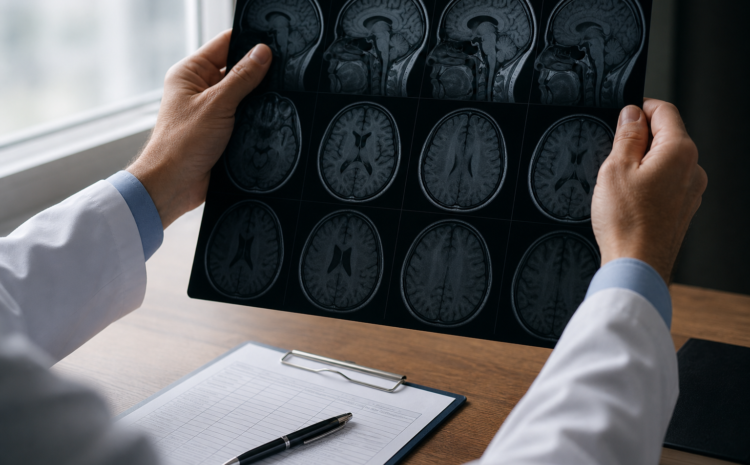
Of all the injuries that can result from a serious accident, traumatic brain injuries (TBI) are among the most misunderstood — by the general public, by insurance companies, and sometimes by the medical providers who treat them. They are also among the most life-altering.
If you or a family member experienced a head impact or violent shaking in an accident, understanding TBI — how it presents, why it’s often missed, and what it means for a legal claim — could be one of the most important things you read.
1. What Is a Traumatic Brain Injury?
A traumatic brain injury occurs when an external force disrupts normal brain function. TBI exists on a spectrum:
Mild TBI (commonly called a concussion): A brief disruption in brain function — loss of consciousness for less than 30 minutes, confusion, or amnesia around the time of the injury. Despite the word “mild,” concussions can have serious and lasting consequences.
Moderate TBI: Loss of consciousness between 30 minutes and 24 hours, with more significant cognitive and neurological symptoms.
Severe TBI: Loss of consciousness for more than 24 hours, often resulting in significant permanent impairment or death.
TBI can occur even without a direct blow to the head. In car accidents, for example, the brain can sustain injury from the violent deceleration and rotational forces involved in a collision — even when the head does not strike any surface. Whiplash-type mechanisms can cause significant brain injury without any visible impact.
2. Why TBI Is Frequently Missed or Underdiagnosed
Traumatic brain injuries are frequently underdiagnosed for several interconnected reasons:
Standard imaging often misses mild TBI
A CT scan — the most commonly used imaging tool in emergency settings — is excellent at detecting bleeding, fractures, and gross structural damage. But it frequently shows no abnormality in mild and moderate TBI cases, even when the brain has been meaningfully injured. MRI is more sensitive, but is not always ordered. Specialized functional imaging — fMRI, PET, SPECT — can detect abnormalities missed by conventional imaging but is rarely used in standard emergency evaluations.
A “normal” CT scan does not mean a normal brain. Many TBI victims are told they are fine based on imaging that simply wasn’t designed to detect the type of injury they sustained.
Symptoms are often delayed or attributed to other causes
TBI symptoms frequently do not appear — or do not become apparent — immediately after an accident. Headaches, cognitive fog, memory problems, sleep disruption, mood changes, light and sound sensitivity, and difficulty concentrating may emerge days or weeks after the injury. By then, the connection to the accident may not be immediately obvious to the treating provider or the patient.
These symptoms are also easily attributed to other causes — stress, anxiety, poor sleep, or normal post-accident reactions — which can delay appropriate diagnosis and treatment.
Victims often don’t report symptoms
Many TBI victims minimize or fail to report cognitive and emotional symptoms, either because they don’t recognize them as injury-related, because they are focused on more visible physical injuries, or because they feel pressure to present as functioning normally. Symptoms like mood changes, irritability, or difficulty concentrating can be hard to articulate and easy to dismiss.
3. Common Symptoms of TBI That Are Often Overlooked
If you experienced any of the following after an accident, you may have sustained a TBI — even if a CT scan was normal:
- Persistent headaches or pressure in the head
- Memory problems — difficulty recalling events before or after the accident, or short-term memory lapses
- Difficulty concentrating or following conversations
- Cognitive slowing — taking longer to process information or formulate responses
- Fatigue disproportionate to activity level
- Sleep disturbances — insomnia, hypersomnia, or disrupted sleep patterns
- Sensitivity to light (photophobia) or sound (phonophobia)
- Dizziness, balance problems, or visual disturbances
- Mood changes — irritability, anxiety, depression, emotional volatility
- Loss of smell or taste
These symptoms should be evaluated by a neurologist or neuropsychologist, not dismissed as stress or anxiety.
4. Why TBI Claims Are Frequently Undervalued
Insurance companies routinely undervalue TBI claims for several reasons that align with the diagnostic challenges described above:
- Normal imaging is cited to deny the injury. “Your CT scan was normal” becomes shorthand for “you weren’t hurt” — which is medically incorrect but persuasive to a lay adjuster or jury without expert testimony to counter it.
- Delayed symptom onset is used to break the causal link. If symptoms didn’t appear at the emergency room, the insurer argues they weren’t caused by the accident.
- Subjective symptoms are characterized as unverifiable. Cognitive fog, memory problems, and mood changes don’t show up on an X-ray, which makes them easier to dispute.
- Neuropsychological testing is minimized or dismissed. Standardized cognitive testing can objectively document TBI-related impairment, but defense experts may challenge the methodology or interpretation.
Countering these tactics requires neurological and neuropsychological expertise, skilled attorney advocacy, and, in serious cases, access to specialized imaging and expert witnesses.
5. The Long-Term Impact of TBI
Even “mild” TBI can have significant long-term consequences:
- Post-concussion syndrome — persistent symptoms lasting months or years after the initial injury
- Cognitive impairment affecting work performance and professional advancement
- Emotional and psychological consequences, including depression, anxiety, and PTSD
- Relationship strain from mood changes, irritability, and personality shifts
- Increased risk of future neurological issues with repeated TBI
The long-term impact of TBI is often the largest component of a serious TBI claim — and it requires expert testimony to quantify appropriately for a jury or settlement demand.
6. What to Do If You Suspect a TBI
- Tell every medical provider about any head impact, violent motion, loss of consciousness, or confusion you experienced at the time of the accident — even if it seemed brief
- Request a neurological referral if you are experiencing any of the symptoms described above
- Undergo neuropsychological testing — objective cognitive assessment can document impairment that does not appear on standard imaging
- Document your symptoms daily in a personal injury journal — cognitive and emotional symptoms that are recorded contemporaneously are far more credible than symptoms described after the fact
- Contact a personal injury attorney who has experience with TBI cases and access to the medical experts necessary to properly evaluate and present your claim
Talk to Kim Welch Law Today
Brain injury cases require specialized knowledge, the right medical experts, and an attorney prepared to fight against insurance companies that will do everything possible to minimize your injury. Kim Welch Law handles TBI cases in Colorado Springs and the Las Vegas/Henderson area, and we offer free consultations with no obligation.
Colorado Springs and Las Vegas/Henderson, NV: (888) 590-5510 Website: www.kimwelchlaw.com
*Kim Welch is a personal injury attorney serving clients in Colorado Springs, CO and Las Vegas and Henderson, NV. This blog post is for general informational purposes only and does not constitute legal advice. Contact our office for guidance specific to your situation.*